Random 7

22 Jan 2010

I was tagged by Katrina from Pugly Pixel and Piper from One Sydney Road to list my Random 7, and here they are:

1. I was tempted by lots of pretty handmade paper last weekend.


2. I love visiting Shell Bay in Dorset. When you're there, it feels like you could be anywhere in the world.


3. I have adored Boyzone since I was young girl. Tragically Stephen passed away very suddenly last year. I saw them perform at Wembley only a few months before, so my photos from this concert are very precious to me.


4. I'm obsessed with beads.


5. When she's not trying to open cupboard doors, attacking my orchids or meowing, Honey likes to throw some dance moves to get my attention :)


6. I have a love/hate relationship with shoes. There are so many pretty ones out there, but I can't wear them because A: I don't wear leather, and B: I'm only safe wearing flats. (Twice I've slipped over and landed on my chin resulting in a damaged nerve in a tooth and a split chin!)


7. I like to keep my home free of clutter. But my real secret is that I have 3 of these cupboards (Ikea Billy bookcases with customised glass doors) so I can stash things away that I want to keep it out of sight. Shhhhh don't tell anyone I'm secretly messy...


Raven Row

21 Jan 2010


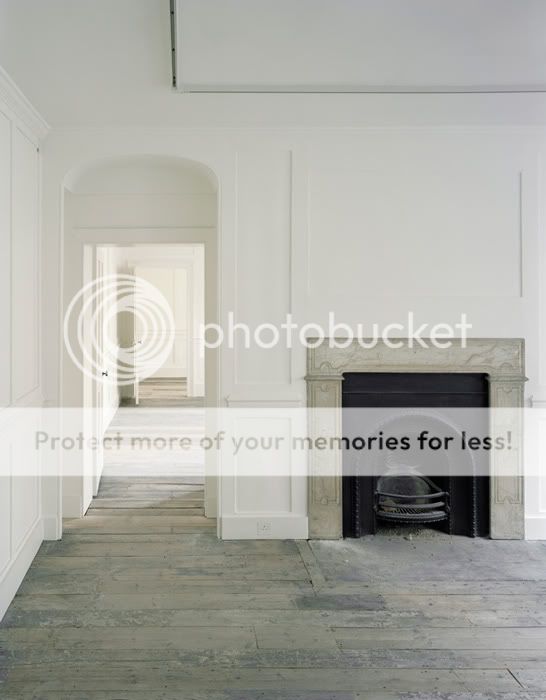
This week's lecture at university was by Tom Emerson, who is a director at 6a Architects, and he talked us through a recent project. Raven Row is a new non-profit exhibition centre in London located in two 18th century silk mercers' houses in Spitalfields. The building incorporates contemporary art galleries, two flats for artist residencies as well as studio space. 6a Architects totally renovated the existing buildings and created two new galleries in an excavated basement.

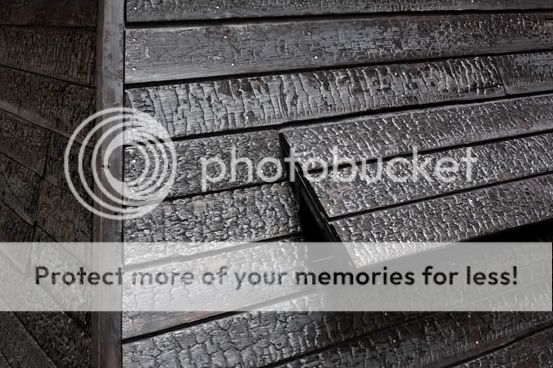
The building was ravaged by a fire in the 1970s. Every part of the building was covered in a thick layer of char, but surprisingly the ornate features were not totally destroyed and could be restored.


The notion of burning is a recurring theme throughout the project. Inspired by a traditional Japanese method of cladding buildings with burnt timber, the architects carried out a series of experiments. Surprisingly, charred wood protects a building from fire (as the wood cannot burn twice) and is very resilient to the elements. Part of the roof is clad in burnt cedar which can be seen from various points around the building.


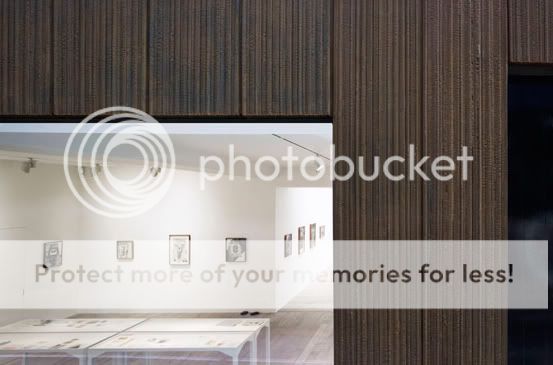
Burnt timber is resilient to the weather, but it will soon disintegrate if touched. They cast the charred timber in iron and used this on one of the façades, which introduces the texture of burnt wood but in much more hard wearing material.


These are ventilation holes in the iron panels.


The staircase in the new basement was inspired by a traditional 18th century cantilevered staircase, and they designed and cast a modern version in concrete. It's incredible that each step overlaps by only a few millimeters but is so strong. There is a 'swelling' at the end of the balustrade which is a reference to a traditional scroll.


The most amazing aspect of the project is that they actually managed to find one of the original Rococo interiors in America and reinstall it! After the war, many 18th century rooms in England were striped and sold to America. The interior panels were shipped back in several packages, and over a period of 6 weeks the room was pieced back together. It's ironic that this interior was absent during the 1970s fire, and as a result it is the only completely intact interior in the building.


This entire project is inspired by holding onto lost stories and memories of the building. Some of these stories are based on word of mouth, such as incidental facts from a lady who lived in the building her entire life, and others are based on a catalogue of photos they discovered in the London Metropolitan Archives.


There are many layers of history on this site and prior to the 18th century building there was a building dating back to the 16th century, and some of these original fireplaces still remain. Tom likened the building to a palimpsest.

In keeping with the notion of trace, they designed door knobs that incorporate a thumb indentation, which brings a beautiful tactile quality to an every day object.


It was most interesting when Tom explained that the narrative of the project evolved naturally, and it wasn't until they reflected several months later that they discovered everything they had added to the building was either burnt or cast. He said that if something is too premeditated the project becomes inflexible. At university we are told not to post-rationalise, but their method of acting on instinct and reflecting later has produced a really elegant and honest building. The pieces of the puzzle came together naturally as they discovered more stories about the building.

Tom said that although there is an underlying narrative, it was never presented to the client in this way. The client needs to know how the building will perform as a gallery, and how the money is being spent. As an architect he needs to be able to speak about the same project in a variety of ways for different audiences (e.g. client, colleagues, builders, planning officers).


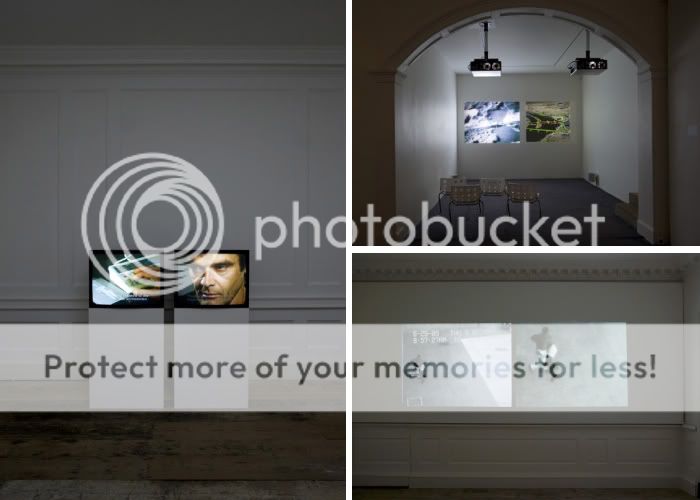
This was the most inspiring lecture so far (which is evident from the length of this post!) and I'm planning to visit the gallery soon. At the moment there is a film exhibition by Harun Farocki and the rooms are very dark. The screens and projectors provide a similar level of light to the flames from fireplaces that would have been used in the 18th century, so it's an exciting and unusual time to experience the space.

Etsy favourite: Spinthread


[Images: Spinthread]

Each of these gorgeous necklaces by Spinthread is a little work of art. The embroidered pendants are backed with delicate lace and each piece comes in its own jewellery box. It was virtually impossible to choose my favourites, as they're all beautiful!

White Townhouse: Hot or not?

20 Jan 2010


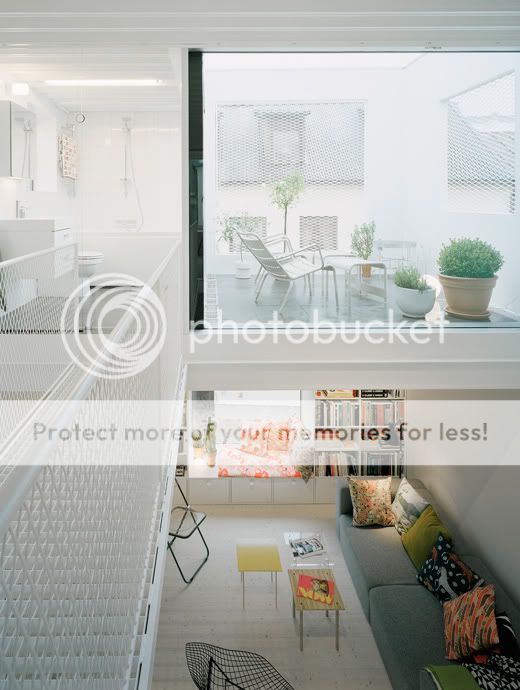
I can't decide if I like this Swedish townhouse or if it's just too brutal and unsympathetic to the traditional neighbouring houses. From some angles it seems to fit in but in other photos it seems so loud.

But this is what the architect, Elding Oscarson, says: "The building relates to the surroundings in scale, proportion and in the way it adds to the established rhythm of low and tall buildings along the street." [source]

The site was empty for over 50 years, so this new building has definitely added value to the street.


Rather than copying the style of the traditional houses, this townhouse reflects the design of today, and in a few decades people will look at it and admire the layers of history in the street. This is seen in London a lot: there are streets with buildings spanning several centuries, and then a modern building will spring up. Why shouldn't we juxtapose ultra-modern with traditional? They did this in the 19th century when they built next to 17th century buildings.


I'm attracted to the simple lines and the minimalist windows, especially the opening in the roof that has created a perfect roof terrace (photo above).


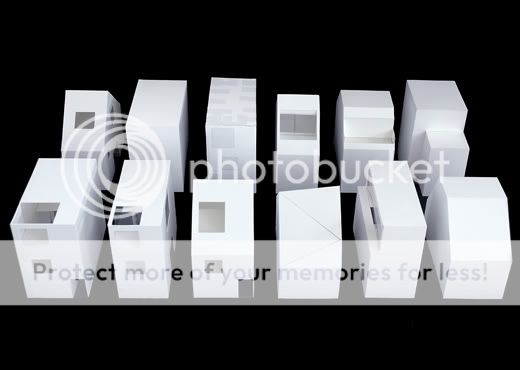
This final image is the most exciting to me as it shows the different options that the architects considered before settling on the final form.


[All images: Elding Oscarson. Found via: Dezeen.]

Space of the week: Calming green

19 Jan 2010


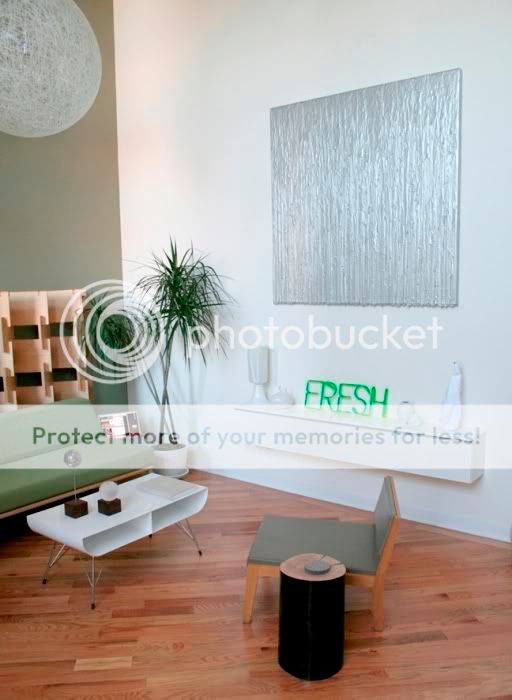
At the moment I'm torn between the very clean and calm style of this home, and something with more vibrant colours. This is a space that I often refer to as I've tried to create a similar calm environment in my own home, but I'm still deciding whether I should introduce some more colour. Here, the soft green acts as a wonderful backdrop to their stunning furniture and sculptures. I think it works so well because the high ceilings and diagonal wood flooring add drama.

Painting with tape

18 Jan 2010


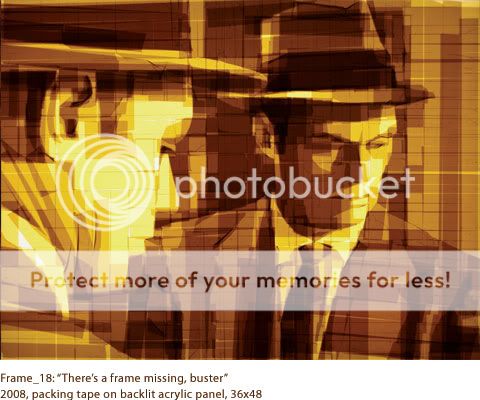
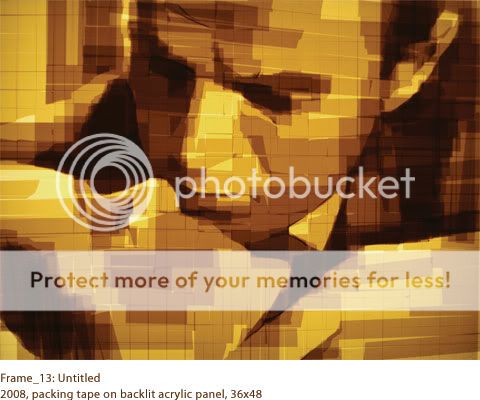
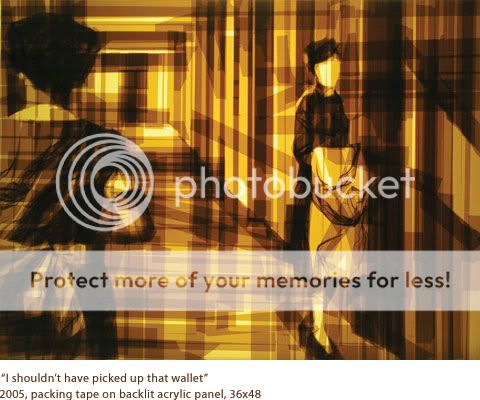
These incredible pictures were created by mixed-media artist Mark Khaisman using brown parcel tape. It's amazing how much depth he's created, and I like the way the angular pieces of tape make a reference to cubism.

This is what he says about his work: "My works are large archetypal representational images, made from layer upon layer of translucent packing tape, applied to clear Plexiglas and placed in front of a light box to give the image shadow and depth. I see my tape art as a form of painting. The 2-inch tape acts as a wide brush, and the light behind the panels as an alchemist's luminous blending medium. In working with tape, like in painting, accident and control are always present.

It takes me usually about a week to make a new work. I feel that work is completed when I no longer understand how it's done, when it feels as if it has a life of it's own."


[Quote & images: Mark Khaisman.]

Juicy mid-century

16 Jan 2010


[All images: Zoe Murphy website and blog]

I'm really loving these colourful designs by Zoe Murphy. She takes inspiration from her home town Margate, and reinvents midcentury furniture and recycles textiles. The designs are ethical and beautiful at the same time. She is a real inspiration as she only left university in 2008 and has already launched her own line!

Anyone for a cup of tea?

15 Jan 2010


A few weeks ago I was swooning over pretty teacups, and a couple of days ago I found my very own set in a charity shop! I often see things I like but resist buying them, but I knew this was a treasure. I dashed back home to get a couple of strong bags, and literally ran back to the shop (and almost slipped on some snow). I don't think the two old ladies in the shop could understand why I was so pleased with a second hand tea service. But it's beautiful. I adore the bold teal/petrol blue colour against the crisp white, and the flower pattern is just perfect. It's by Johnson Bros is marked as Ironstone Snowhite and the pattern is Engadine, and it was produced in England during the mid to late '70s.

The whole set only cost £8! I bought: 6 cups, 5 saucers, 6 tea plates, 1 cake plate, tea pot, milk jug & sugar bowl! I'm might buy an extra cup and saucer on ebay to make up for the missing saucer, but I don't think I'll ever have 6 people for tea anyway. There's no sign of tea staining in any of the pieces, but the jug has some crazing on the glaze. My favourite piece is the teapot and it's now on display in my kitchen. Even my husband was impressed with my purchase, and that's saying something ;)
There was once a little brass mouse...

14 Jan 2010


...who was looking for a little friend. I discovered him in a charity shop a few years ago. I'd hoped he was unique, but his brothers are scattered across Etsy. Nevermind, I still love him. I'd like to get him a vintage brass kitten to keep him company: the baby one in the third picture is my favourite.


[Cats from Etsy: Old Baltimore Vintage, The Pink Room, Olive Vintage, Old Baltimore Vintage]